الفكرة الأساسية: تعلّم اللغة عملية ذهنية نشطة (active mental processing)، مو مجرد تكوين عادات (not just habit formation). يعني المخ يشتغل: ينتبه، يفهم، يخزّن، ويسترجع.
العنصر
وش تقول السلايدات
Focus (التركيز)
كيف المتعلم ينتبه للغة، يفهمها، يخزّنها، ويسترجعها (attend to, understand, store, retrieve).
Key idea (الفكرة المفتاحية)
المعرفة الجديدة تُبنى على المعرفة السابقة، وتصير أسرع وأسهل مع التدريب (more efficient with practice).
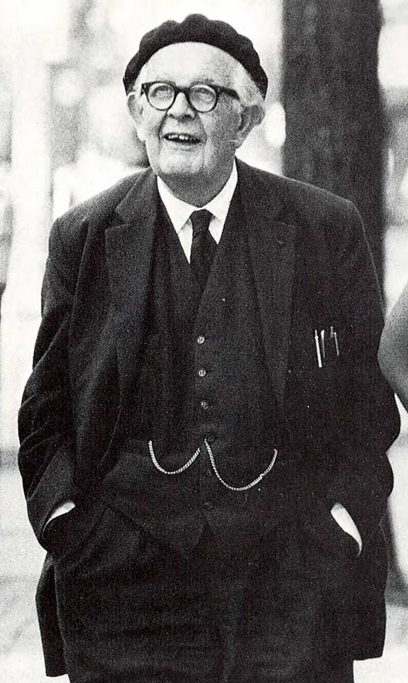
📷 Jean Piaget، من أبرز علماء المعرفة العامة (general cognition)
Wikimedia Commons · Unidentified (Ensian published by University of Michigan) · Public domain · source
2) أبرز العلماء (Major contributors)
المجموعة
العلماء
مجالهم
المعرفة العامة
Piaget & Bruner
general cognition: كيف يفكر الإنسان ويبني معرفته
المعالجة واكتساب اللغة
Anderson, Schmidt & DeKeyser
processing and SLA: كيف تُعالَج اللغة الثانية في الذهن
احفظها كذا: Piaget و Bruner = عامّة · Anderson و Schmidt و DeKeyser = لغة ومعالجة.
3) كيف المخ يتعلم لغة؟ العمليات الأربع
الشكل 1: العمليات الذهنية الأربع في النظرية المعرفية
#
العملية
معناها
مثال
1
Attention & noticing
تلاحظ الأشكال المهمة في الـ input
تنتبه إن كل الأفعال في القصة تنتهي بـ -ed
2
Working memory
تعالج المعلومة وقتها وأنت تسمع أو تقرأ أو تتكلم
تمسك أول الجملة في بالك لين تخلص آخرها
3
Long-term memory
تخزّن المفردات والأنماط والمعرفة اللغوية
تتذكر كلمة تعلمتها الشهر اللي فات
4
Practice & automaticity
تسترجع اللغة وتستخدمها بسهولة متزايدة
تقول "How are you?" بدون ما تفكر
الترتيب مهم في الاختبار: Attention ← Working memory ← Long-term memory ← Automaticity.
4) تطبيقها في الفصل (Applying Cognitive Theory)
المهارة
وش يسوي المعلم
Grammar
يخلي الطلاب يلاحظون الأنماط ويستنتجون القاعدة من الأمثلة (notice patterns, infer rules).
الشكل 2: سلسلة النظرية المعرفية من الملاحظة إلى الاستخدام المستقل
ساعد المتعلم: يلاحظ ← يفهم ← يتدرّب ← يسترجع ← يستخدم اللغة باستقلالية (notice → understand → practise → retrieve → use language independently).
لا تخلط: النظرية السلوكية (Behaviorism) تشوف التعلم تكوين عادات بالتكرار والتعزيز. النظرية المعرفية تقول: التكرار مفيد، لكن الأهم العمليات الذهنية (انتباه، ذاكرة، معالجة). إذا شفت كلمة noticing أو memory أو processing فهي Cognitive.
اللغة تنمو من خلال المشاركة والتواصل والتعلّم المدعوم اجتماعياً (participation, communication, socially supported learning).
الفكرة المركزية: التفاعل مع متحدثين أقدر (معلمين، زملاء، ناس يتكلمون أحسن) يدعم نمو اللغة عن طريق تواصل له معنى ومشاركة موجَّهة (guided participation).
2) أبرز العلماء (Major scholars)
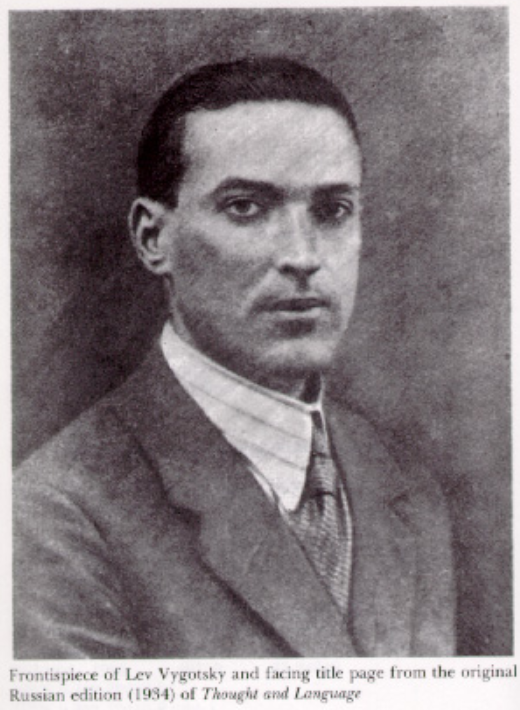
📷 Lev Vygotsky، صاحب النظرية الاجتماعية الثقافية و ZPD
Sociocultural theory (النظرية الاجتماعية الثقافية) و Zone of Proximal Development (ZPD)
Michael Long
Interaction Hypothesis (فرضية التفاعل) و negotiation of meaning (التفاوض على المعنى)
اربطها: Vygotsky = ZPD · Long = Let's negotiate (التفاوض على المعنى).
3) المبادئ الأساسية (Key principles)
التفاعل يدعم النمو عن طريق التوجيه، والتغذية الراجعة، وفرص استخدام اللغة.
أ) Scaffolding & ZPD
الشكل 3: منطقة النمو القريبة (ZPD)، والسقالات اللي تقل مع الوقت
دعم مؤقت (temporary support) يساعد الطالب يسوي مهام صعبة عليه لحاله، وبعدين الدعم يقل تدريجياً (gradually reduced).
ب) Negotiation of Meaning
الشكل 4: مثال على التفاوض على المعنى
أثناء الكلام، المتعلمين: يطلبون توضيح (ask for clarification)، يتأكدون من الفهم (confirm understanding)، ويعيدون صياغة الرسالة (reformulate messages).
ج) Feedback & Collaboration
العمل الثنائي، مساعدة الزملاء، والتصحيح (corrective feedback) تشجّع الملاحظة (noticing) وتحسّن الأداء اللغوي.
لا تخلط:ZPD = المنطقة (الفرق بين اللي يقدر عليه لحاله واللي يقدر عليه بمساعدة). Scaffolding = الدعم نفسه اللي يعطيه المعلم داخل هالمنطقة وبعدين يشيله شوي شوي.
4) التطبيقات في الفصل (Classroom applications)
الشكل 5: نشاط فجوة المعلومات (Information gap)
#
النشاط
كيف
المبدأ
1
Information-gap task
كل شريك عنده معلومات مختلفة، فلازم يسألون ويوضّحون ويتعاونون عشان يكملون جدول.
Negotiation of meaning
2
Guided role-play
يتدربون على موقف حقيقي. المعلم يعطي نموذج أول، يدعمهم، وبعدين يسحب دعمه.
Scaffolding / ZPD
3
Group problem-solving
مجموعات تناقش مشكلة في الجامعة، يتفاوضون على حلول، ويقدّمون توصيات مع بعض.
Collaboration
📷 العمل الثنائي والجماعي: بيئة التفاعل اللي تدعم تعلّم اللغة
Wikimedia Commons · Lemurbaby · CC BY-SA 3.0 · source
الخلاصة (Teaching takeaway): صمّم مهام تحتاج تفاعل له معنى، وتوجيه، وحل مشكلات مشترك (meaningful interaction, guidance, shared problem-solving).
Stephen Krashen طوّر النموذج في السبعينات، وعرضه في كتابين: Principles and Practice in Second Language Acquisition(1982) و The Input Hypothesis: Issues and Implications(1985). يحاول يفسّر كيف الناس يكتسبون لغة غير لغتهم الأم، وهو من أكثر نظريات الـ SLA تأثيراً وجدلاً.
وش رفض؟ الفكرة التقليدية إن تعلّم اللغة يعني: تحفظ قواعد، وتتدرب على أنماط الجمل، والمعلم يصحح لك.
وش قال بدالها؟ الإنسان يطوّر لغته بفهم رسائل ذات معنى (understanding meaningful messages).
الفكرة المركزية: الاكتساب يصير بالتعرض لـ comprehensible input (مدخلات مفهومة)، مو بدراسة القواعد بشكل واعي.
مثال: طالب يسمع ويقرأ قصص كثيرة عن أحداث صارت في الماضي، وبالتدريج يصير يستخدم الـ past tense صح، بدون ما يدرس قاعدته.
هل القواعد ما لها فايدة؟ لا، لكن دورها محدود: تساعد المتعلم يراقب ويعدّل (monitor and edit) الكلام اللي أنتجه أصلاً من نظامه المكتسب.
2) الفرضيات الخمس
النموذج يتكون من خمس فرضيات مترابطة تشرح كيف تتطور الكفاءة اللغوية، وكيف تنعالج اللغة، ووش ظروف الصف اللي تساعد على الاكتساب.
الشكل 6: الفرضيات الخمس لنموذج المراقب
الفرضية
الشرح المختصر
Acquisition–Learning
الاكتساب لا واعي، والتعلّم واعي (معرفة القواعد).
Monitor
المعرفة الواعية بالقواعد تساعد تعدّل الكلام اللي تنتجه.
Natural Order
بعض التراكيب تنكسب بترتيب متوقع.
Input
نكتسب بمدخلات مفهومة أعلى بشوي من مستوانا (i + 1).
Affective Filter
القلق والدافعية والثقة تأثر على استفادتنا من المدخلات.
احفظها بكلمة: A M N I A ← Acquisition, Monitor, Natural order, Input, Affective filter.
كراشن يقول الكبار عندهم طريقتين مختلفتين تماماً لتطوير الكفاءة في اللغة الثانية:
Acquisition (اكتساب)
Learning (تعلّم)
النوع
لا واعي (subconscious) غالباً
واعي (conscious)
من وين؟
التعرض للغة بمعنى (meaningful exposure)
معرفة صريحة: قواعد، مصطلحات، تركيب الجمل
يشبه
الطفل يتعلم لغته الأم
دراسة القواعد في الصف
الشكل 7: النظام المكتسب ينتج الكلام، والنظام المتعلَّم يعدّل فقط
مثال السلايدات: طالب يعرف قاعدة الـ -s مع he/she ويشرحها صح، لكن في المحادثة العفوية يقول: "He work in Muscat." كراشن يفسّرها: معرفة القاعدة ≠ اكتسابها.
لا تخلط: كراشن يقول التعلّم الواعي ما يتحوّل لاكتساب لا واعي بمجرد التدريب. النظامين منفصلين.
4) الفرضية الثانية: Natural Order Hypothesis
بعض التراكيب النحوية تنكسب بترتيب متوقع نسبياً، وهذا الترتيب مو بالضرورة نفس الترتيب اللي ندرّسه.
المتعلم يكتسب بعض الأشياء بدري، ويظل يتعثر في أشياء ثانية حتى بعد ما يدرسها.
كراشن اعتمد على أبحاث تطور الـ grammatical morphemes في الإنجليزي، عند الأطفال والكبار.
مثال الصف: المعلم يدرّس الـ third-person singular -s في الأسبوع 3:
He plays football. · She reads books. · My father works in a hospital.
الطلاب يحلّون التمارين المضبوطة صح، لكن كثير منهم يحذفون الـ -s في الكلام العفوي. التفسير: القدرة على اكتساب التركيب مرتبطة بـ الجاهزية التطورية (developmental readiness)، مو بس بتوقيت الشرح.
الـ Natural order = ترتيب الاكتساب، مو ترتيب المنهج. تدريسه بدري ما يعني إنه ينكسب بدري.
5) الفرضية الثالثة: Monitor Hypothesis
تشرح الدور المحدود للمعرفة الواعية بالقواعد:
المعرفة المكتسبة هي اللي تنتج الجمل (generating utterances).
المعرفة المتعلَّمة تُستخدم بس عشان تفحص وتصحح وتعدّل الناتج.
الـ Monitor = محرر نحوي (grammatical editor).
الشروط الثلاثة لاستخدام الـ Monitor
الشكل 8: لازم تتوفر الشروط الثلاثة عشان يشتغل الـ Monitor
الشرط
المعنى
1. Sufficient time
عنده وقت يفكر ويراجع كلامه.
2. Focus on form
يركز على صحة اللغة، مو بس المعنى.
3. Knowledge of the rule
يعرف القاعدة اللي يحتاجها عشان يصحح.
انتبه: لو ناقص شرط واحد ما يشتغل الـ Monitor. مثلاً في محادثة سريعة ما فيه وقت، وفي نقاش حماسي التركيز على المعنى مو الشكل.
تعتبر أكثر جزء مؤثر في النموذج. تقول: الاكتساب يصير لما المتعلم يفهم رسائل فيها تراكيب نحوية أعلى بشوي من مستواه الحالي.
i + 1
i = مستوى المتعلم الحالي في الكفاءة المكتسبة.
+1 = المستوى اللي بعده في التطور اللغوي.
الشكل 9: المدخلات المثالية i + 1، لا سهلة مرة ولا صعبة مرة
لا تخلط:i = وين أنت الحين. +1 = الخطوة الجاية. لو المدخلات i بس ما فيه شي جديد، ولو صعبة مرة ما تنفهم.
خصائص المدخلات الفعّالة
الخاصية
المعنى
Comprehensible
المتعلم يفهم الرسالة.
Interesting or relevant
المحتوى يشد انتباهه.
Sufficient in quantity
كمية كافية وتعرض مستمر، مو أمثلة متفرقة.
Not grammatically sequenced
ما تكون مقيدة بتسلسل نحوي جامد، والتواصل ما يتحوّل لمنهج قواعد بس.
كيف المعلم يخلي المدخلات مفهومة؟ صور، عرض عملي، شرح أبسط، تكرار، إعادة صياغة، مواضيع مألوفة، وقرائن من السياق.
القراءة الموسّعة (Extensive reading)
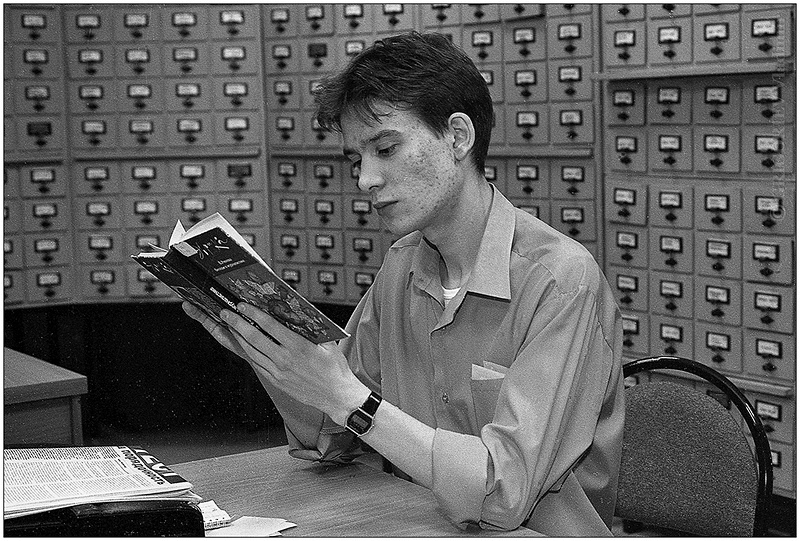
📷 القراءة الموسّعة: قصص وكتب مبسّطة (graded readers) يفهمها الطالب بنفسه.
Wikimedia Commons · Vladimir Grigoryev · CC BY-SA 3.0 · source
من أهم تطبيقات الفرضية: الطالب يختار graded readers وقصص قصيرة يفهم أغلبها لحاله. مع القراءة المستمرة يقابل مفردات وتراكيب وأنماط خطاب في سياق له معنى، وتركيزه على فهم القصة مو حفظ القواعد.
حدود فرضية المدخلات
ما فيه طريقة متفق عليها نحسب فيها الـ i + 1 لكل متعلم.
فهم الرسالة ما يضمن اكتساب كل تركيب نحوي فيها.
ممكن المتعلم ياخذ مدخلات كثيرة ويظل يكرر نفس الأخطاء.
نظريات ثانية تأكد على دور الـ output والتفاعل والـ feedback والانتباه.
Higgs (1985): الفرضية تعجز تفسّر الـ fossilisation (التحجّر)، يعني أخطاء ومحدودية تظل ثابتة رغم التعرض الكبير للغة.
2) الفرضية الخامسة: Affective Filter Hypothesis
العوامل العاطفية والنفسية تحدد هل المدخلات المفهومة توصل للاكتساب أو لا. أهم العوامل:
Motivation (الدافعية)
Self-confidence (الثقة بالنفس)
Anxiety (القلق)
الشكل 10: المصفاة المنخفضة تخلي المدخلات تدخل، والمرتفعة تصدّها
أهداف المحاضرة: تشرح كيف نشأ الـ CLT وأسسه النظرية، تفرّق بين الكفاءة اللغوية والكفاءة التواصلية، تعرف المبادئ وأدوار المعلم والطالب، تصمم مهام هادفة، وتقيّم نقاط القوة والضعف وطرق التقييم.
1) ليش ظهر المنهج التواصلي؟
قبل الـ CLT كان التركيز على القواعد والترجمة والتكرار. النتيجة: طالب يجيب درجة عالية في اختبار القواعد، بس ما يقدر يسولف. ليش؟ لأنه تعلّم شكل اللغة، وما تدرّب على استخدامها في مواقف حقيقية.
الشكل 11: التركيز القديم مقابل استجابة الـ CLT
التركيز القديم (Earlier emphases)
استجابة الـ CLT (CLT response)
Grammar rules and translation: قواعد وترجمة
Purposeful language use: استخدام اللغة لهدف
Repetition and controlled drills: تكرار وتمارين مقيّدة
Appropriateness in context: الكلام المناسب للموقف
Accuracy in isolated sentences: دقة في جمل منفصلة
Interaction and meaning negotiation: تفاعل وتفاوض على المعنى
2) وش هو Communicative Language Teaching؟
منهج (approach) يركز على القدرة على التواصل بفعالية وبشكل مناسب (effectively and appropriately).
الطلاب يستخدمون اللغة لأهداف حقيقية، مو بس يتلاعبون بالأشكال والقواعد.
الأنشطة تخلق سبب حقيقي للكلام: يسأل، يشرح، يتفاوض، يقرر، ويرد.
القواعد والمفردات والنطق والتغذية الراجعة تظل مهمة. الـ CLT ما يلغي القواعد.
غلط شائع: "الـ CLT يعني ما فيه قواعد". لا، القواعد موجودة، بس تخدم التواصل.
3) أهم الأسماء والتطور التاريخي
الاسم
السنة
المساهمة
Dell Hymes
1972
الكفاءة التواصلية (communicative competence)
M. A. K. Halliday
—
وظائف اللغة والمعنى الاجتماعي (language functions)
ليش الـ CLT منهج (approach) مو اختراع شخص واحد؟ لأنه تطوّر من مساهمات عدة علماء عبر سنوات، وهو مبادئ عامة مو خطوات ثابتة.
4) الكفاءة: Chomsky مقابل Hymes
الشكل 12: الكفاءة اللغوية (Chomsky) مقابل الكفاءة التواصلية (Hymes)
Linguistic competence
Communicative competence
صاحبها
Chomsky
Hymes
وش هي
معرفة التراكيب النحوية
معرفة الاستخدام المناسب للغة
السؤال
وش الممكن شكلياً في اللغة؟
مين يتكلم، مع مين، وين، وليش؟
مثال
تكوّن طلب صحيح نحوياً
تختار طلب مؤدب ومناسب
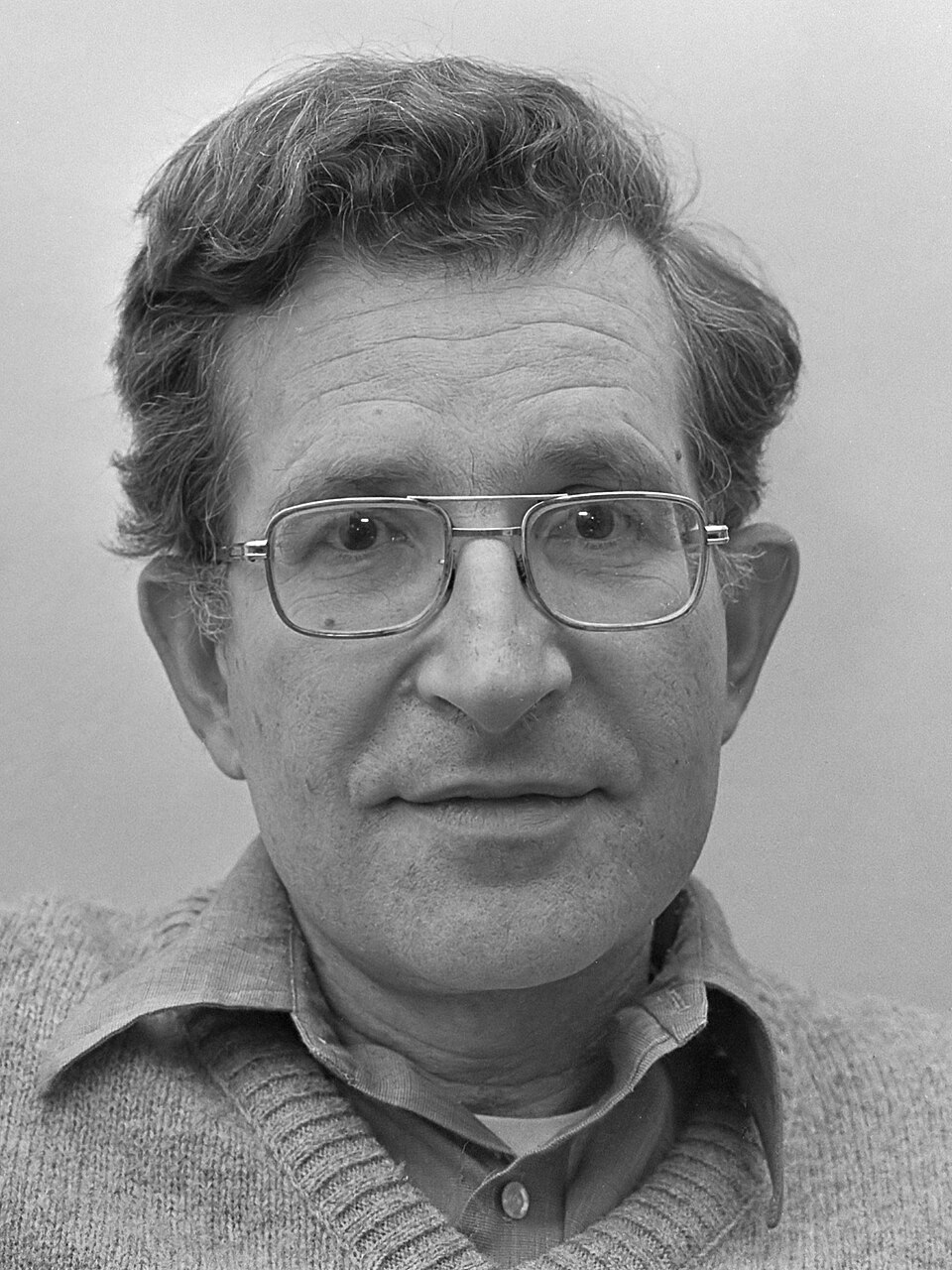
📷 Noam Chomsky، صاحب مفهوم الكفاءة اللغوية (linguistic competence).
Wikimedia Commons · Hans Peters for Anefo · CC0 · source
تطلب مساعدة من صديقك: "Help me with this?". من الدكتور: "Would you mind helping me with this?". الجملتين صح نحوياً، بس الاختيار المناسب = كفاءة تواصلية.
5) المكونات الأربعة للكفاءة التواصلية (Canale & Swain)
الشكل 13: المكونات الأربعة للكفاءة التواصلية مع أمثلة
المكوّن
المعنى
مثال
Grammatical
مفردات وتراكيب وأشكال صحيحة
She goes مو She go
Sociolinguistic
لغة مناسبة اجتماعياً وثقافياً
تكلم الدكتور بأدب
Discourse
الترابط والتماسك بين الجمل (coherence & cohesion)
تربط أفكارك بـ first, however, so
Strategic
توضيح، إعادة صياغة، إصلاح انقطاع التواصل
نسيت كلمة ladder فتقول "the thing you climb"
لا تخلط:Sociolinguistic = مناسب للموقف (مين وين). Discourse = ترابط الكلام مع بعض. Strategic = تنقذ المحادثة لما تنسى كلمة أو ما تفهم.
سؤال السلايد: إذا نسيت كلمة إنجليزي وانت تسولف، أي كفاءة تساعدك؟ ← Strategic competence.
6) الشكل والوظيفة (Forms and Functions)
نفس الوظيفة (طلب مساعدة) ممكن تنقال بأكثر من شكل: Could you...? / Would you mind...? / May I...?. والوظائف هنا: طلب المساعدة، الأدب المناسب، وإدارة العلاقات الاجتماعية.
الشكل 14: وظيفة وحدة (الطلب) بأشكال مختلفة حسب الموقف
هل الطلبات الثلاثة مناسبة لكل موقف؟ لا. الاختيار يعتمد على مين تكلم ووين. هذا لب الـ CLT.
7) التفاعل والتفاوض على المعنى (Negotiation of meaning)
فرص التعلّم تطلع أثناء التفاعل الهادف.
الطلاب يطلبون توضيح ويتأكدون من الفهم.
مشاكل التواصل تخلّي الطالب يعيد الصياغة ويستفيد من التغذية الراجعة.
A: What do you mean by "souq"? B: A traditional market.
وش يتعلم الطالب من سوء فهم صار أثناء المهمة؟ يتعلم كلمات جديدة، وإعادة الصياغة، واستراتيجيات التوضيح. سوء الفهم فرصة تعلّم مو فشل.
قدّم تغذية راجعة وسقالات مناسبة (feedback and scaffolding).
شجّع استقلالية الطالب والتأمل (autonomy and reflection).
2) أدوار المعلم والطالب
الشكل 15: أدوار المعلم والطلاب في فصل الـ CLT
المعلم (Teacher)
الطلاب (Learners)
Task designer and facilitator: يصمم المهمة وييسّرها
Active speakers and listeners: متكلمين ومستمعين نشطين
Observer and language resource: يراقب ويكون مرجع لغوي
Collaborative problem-solvers: يحلون المشاكل مع بعض
Provider of selective feedback: يصحح بشكل انتقائي
Negotiators of meaning: يتفاوضون على المعنى
📷 العمل الثنائي: الطلاب يتكلمون ويتفاوضون، والمعلم يراقب ويساعد.
Wikimedia Commons · Lemurbaby · CC BY-SA 3.0 · source
هل "متمركز حول الطالب" يعني المعلم ما يدرّس؟ لا. المعلم يصمم، يراقب، ويعطي تغذية راجعة. دوره تغيّر، ما اختفى.
3) الطلاقة والدقة (Fluency and Accuracy)
Fluency (الطلاقة)
Accuracy (الدقة)
توصيل الرسالة
استخدام الأشكال الصحيحة
استمرار التفاعل بدون توقف
ملاحظة الأخطاء وتصحيحها
الأولوية للمعنى أثناء المهمة
التغذية الراجعة بعد المهمة
الشكل 16: أثناء المهمة نركز على الطلاقة، وبعدها على الدقة
طالب قال: "Yesterday I go to university." نصحح الحين ولا بعدين؟ إذا النشاط طلاقة ← خلّه يكمل وسجّل الخطأ، وصحّحه بعد المهمة (went). إذا النشاط دقة ← تقدر تصحح فوراً.
4) وش يخلي المهمة "تواصلية"؟
هدف واضح (clear purpose): الطلاب لازم يحققون شي.
فجوة (meaningful gap): واحد ناقصته معلومة أو رأي أو سبب.
اختيار (choice): الطالب يقرر وش يقول وكيف.
نتيجة (outcome): قرار، خطة، حل، أو جدول مكتمل.
فرص للرد والتوضيح والتفاوض على المعنى.
الشكل 17: الخصائص الخمس للمهمة التواصلية
ترديد حوار محفوظ: هل هو تواصلي دايماً؟ لا، لأنه ما فيه فجوة ولا اختيار. الطالب يعرف كل الكلام مسبقاً.
5) الأنشطة الأربعة
النشاط
الموقف / الإجراء
الفائدة
1. Role-play
طالب يطلب تمديد موعد واجب، والدكتور يطلب سبب، ويتفاوضون على الخطوة الجاية.
الأدب والـ register، تبادل الأدوار، ردود عفوية، كفاءة strategic وsociolinguistic
2. Information gap
الطالب A عنده جدول ناقص، وB عنده التفاصيل الناقصة، ويسألون بعض ويكملون.
الجامعة عندها 500 ريال عماني لفعالية: اتفقوا على الفعالية والمكان والأولويات، وسووا ميزانية وبرروها.
الإقناع، التفاوض والاتفاق، كلام مترابط، عمل جماعي
4. Debate & projects
نقاش: هل نسمح بالـ AI في الواجبات؟ / مشروع: دليل إنجليزي للحرم الجامعي بمقابلات وعرض نهائي.
أسباب وحجج مضادة، احترام الرأي الآخر، دمج المهارات الأربع (المشروع أكثر)
الشكل 18: نشاط فجوة المعلومات: كل طالب عنده نص الجدول
وش يصير لو الطالبين عندهم نفس المعلومات؟ تختفي الفجوة، فما فيه سبب حقيقي للسؤال، والنشاط يصير غير تواصلي.
في الـ role-play: عشان يصير تفاعلي مو محفوظ، عطِ كل طالب بطاقة دور بمعلومات مختلفة وخلّ النتيجة مو معروفة مسبقاً. وفي الـ problem-solving: عشان الكل يتكلم، عطِ كل عضو دور محدد (مسؤول ميزانية، كاتب، متحدث...).
6) بنك العبارات الوظيفية (Functional language bank)
البدء والتفاوض
التوضيح والإغلاق
"How about organizing...?" "I see your point, but..." "What if we reduced the cost?"
"Could you explain that?" "Are you suggesting that...?" "So, have we agreed to...?"
7) دمج المهارات (Integrated skills)
استماع: تفهم إعلان فعالية وتتصرف حسب التفاصيل.
محادثة: مقابلة، نقاش خيارات، تفاوض.
قراءة: تقارن كتيبات أو وصف مقررات.
كتابة: تكتب إيميل توصية أو طلب حقيقي.
وتجمعها كلها في سلسلة تعلّم واقعية وحدة.
8) تقييم الكفاءة التواصلية
استخدم الأداء: مقابلات، role-plays، عروض، حل مشكلات.
قيّم: الطلاقة، الدقة، التفاعل، المناسبة، الترابط.
ضمّن استراتيجيات التواصل والتجاوب مع الشريك.
استخدم روبركس واضحة، تقييم الزملاء، والتأمل الذاتي.
اختبار قواعد فقط ما يقدر يقيس الكفاءة التواصلية كاملة. وفي الـ role-play: تحقيق الهدف التواصلي أهم من القواعد المثالية، مع إن الدقة تنحسب بعد.
9) نقاط القوة والتحديات
القوة (Strengths)
التحديات (Challenges)
استخدام لغة له معنى
فصول كبيرة أو مستويات مختلطة
طلاقة ومشاركة
مشاركة غير متساوية
لغة مناسبة للسياق
موارد ووقت محدود
تعاون واستقلالية الطالب
الحاجة لدعم التركيز على الشكل
فصل فيه 45 طالب؟ قسّمهم مجموعات صغيرة بأدوار محددة، واستخدم information gap ثنائي يشتغل فيه الكل بنفس الوقت.
10) تكييف الـ CLT للجامعات العُمانية
مواضيع مناسبة ثقافياً ومواقف جامعية واقعية.
سقالات لمهام المحادثة حسب مستويات الطلاب.
أدوار فردية عشان تزيد المشاركة.
استخدام العربي بشكل استراتيجي وقت الحاجة، مع الحفاظ على أهداف التواصل بالإنجليزي.
ربط العمل التواصلي بمتطلبات التقييم.
11) الورشة والخلاصة
تحدي التصميم: مجموعات من 3–5، اختاروا مستوى ووظيفة لغوية، صمموا مهمة 15 دقيقة لها نتيجة تواصلية حقيقية، حددوا الأدوار والسقالات، وحطوا 3 معايير للتقييم.
الخلاصة: معرفة القواعد ≠ استخدام اللغة بشكل مناسب · الـ CLT يطوّر الكفاءة التواصلية عبر تفاعل هادف · الدرس الفعال فيه مهام حقيقية + دعم + تغذية راجعة · الطلاقة والدقة تتطوران مع بعض · التكييف للسياق المحلي ضروري.
مجموعات تبحث كيف تتغير الطلبات المهذبة حسب السياق.
Krashen: Comprehensible Input
مدخلات مفهومة في السياق وأعلى بشوي من مستواه (i + 1).
قصص متدرجة (graded stories)، ووسائل بصرية، واستماع ذو معنى.
Interaction (Long) & Output (Swain)
التفاعل: طلب توضيح، والتفاوض على المعنى، والتغذية الراجعة. الإنتاج: يخلي الطالب يجرّب أفكاره ويلاحظ الفجوات.
Information-gap، ومقابلات، وكتابة تعاونية.
حدود السلوكية: التقليد وحده ما يفسّر كل اكتساب اللغة. عشان كذا الانتقائي يستخدم التكرار بدون ما يخليه يسيطر على الدرس. والانتقائي مع Krashen: ما يكتفي بالمدخلات. يتأكد إن الطلاب فاهمين، ويعطيهم فرص يستخدمون اللغة.
لا تخلط Long مع Swain: Long ← Interaction: التفاوض على المعنى، وطلب التوضيح، والتغذية الراجعة. Swain ← Output: الإنتاج يخلي الطالب يختبر أفكاره ويلاحظ الفجوات (notice gaps).
2) أدوار المعلم والطالب
المعلم (4 أدوار)
الطالب
Diagnostician: يحدد نقاط القوة والاحتياجات والعقبات
لا تخلط: لو السؤال قال "Eclecticism and postmethod are the same"، الجواب False.
8) الخلاصة: وش يحتاج معلم الإنجليزي المستقبلي؟
يفهم ليش ومتى تنجح كل طريقة.
يخطط تسلسل مترابط حول احتياجات الطلاب والأهداف.
يجمع أدلة من التقييم بدل ما يعتمد على الانطباع.
يتأمّل بشكل منهجي ويتكيّف مع السياق المحلي.
أهم الخلاصات: ما فيه طريقة وحدة هي الأفضل لكل طالب وكل هدف · الاختيارات لازم تكون مبنية على النظرية وحساسة للسياق · اربط input، والتدريب على الشكل، والتفاعل، وoutput · قيّم التعلّم وعدّل تدريسك بالتأمّل.
Lesson 4 Krashen (2): input i+1 and the affective filter SLA Theories Part 2
Part B: Language Teaching Approaches
Lesson 5 CLT (1): foundations and competence CLT
Lesson 6 CLT (2): principles and activities CLT
Lesson 7 The Eclectic Approach (1): foundations and principles Eclectic
Lesson 8 The Eclectic Approach (2): theories and practice Eclectic
Part A
Theories of Second Language Acquisition
نظريات اكتساب اللغة الثانية
Lesson 1: Cognitive Theory
Cognitive Theory · 3 slides
1) What is Cognitive Theory?
Core idea: language learning involves active mental processing, not just habit formation. The mind works on language: it pays attention, understands, stores and retrieves.
Element
What the slides say
Focus
How learners attend to, understand, store and retrieve language.
Key idea
New knowledge builds on prior knowledge and becomes more efficient with practice.
📷 Jean Piaget, a leading figure in general cognition
Wikimedia Commons · Unidentified (Ensian published by University of Michigan) · Public domain · source
2) Major contributors
Group
Scholars
Area
General cognition
Piaget & Bruner
How people think and build knowledge
Processing and SLA
Anderson, Schmidt & DeKeyser
How a second language is processed in the mind
Remember it like this: Piaget and Bruner = general · Anderson, Schmidt and DeKeyser = language processing.
3) How does the mind learn a language? The four processes
Figure 1: The four mental processes in cognitive theory
#
Process
Meaning
Example
1
Attention & noticing
Recognize important forms in the input
You notice that every verb in a story ends in -ed
2
Working memory
Process information in the moment while listening, reading and speaking
Holding the start of a sentence in mind until it ends
3
Long-term memory
Store vocabulary, patterns and linguistic knowledge
Remembering a word you learned last month
4
Practice & automaticity
Retrieve and use language with increasing ease
Saying "How are you?" without thinking
The order matters in the exam: Attention → Working memory → Long-term memory → Automaticity.
4) Applying cognitive theory in the English classroom
Skill
What the teacher does
Grammar
Guide students to notice patterns and infer rules from examples.
Vocabulary
Use semantic maps, associations and spaced retrieval.
Reading & listening
Activate prior knowledge; then predict, infer and summarize.
Speaking & writing
Plan → practise → receive feedback → revise.
5) Takeaway
Figure 2: The cognitive chain from noticing to independent use
Help learners notice → understand → practise → retrieve → use language independently.
Don't confuse:Behaviorism sees learning as habit formation through repetition and reinforcement. Cognitive theory says practice helps, but the key is the mental processes (attention, memory, processing). If you see noticing, memory or processing, think Cognitive.
📝 Lesson 1 quiz
Take it interactively and see your score with an explanation for every mistake
Language develops through participation, communication and socially supported learning.
Central idea: interaction with more capable speakers (teachers, peers) can support language development through meaningful communication and guided participation.
2) Major scholars
📷 Lev Vygotsky, author of sociocultural theory and the ZPD
Sociocultural theory and the Zone of Proximal Development (ZPD)
Michael Long
Interaction Hypothesis and negotiation of meaning
Link them: Vygotsky = ZPD · Long = Let's negotiate (negotiation of meaning).
3) Key principles
Interaction supports development through guidance, feedback and opportunities to use language.
a) Scaffolding & ZPD
Figure 3: The Zone of Proximal Development, with scaffolding that fades over time
Temporary support helps students perform tasks that would be difficult independently. The support is gradually reduced.
b) Negotiation of meaning
Figure 4: An example of negotiation of meaning
During communication, learners ask for clarification, confirm understanding and reformulate messages.
c) Feedback & collaboration
Pair work, peer assistance and corrective feedback can encourage noticing and improve language performance.
Don't confuse: the ZPD is the zone (the gap between what a learner can do alone and what they can do with help). Scaffolding is the support itself that the teacher gives inside that zone and then gradually removes.
4) Classroom applications
Figure 5: An information-gap task
#
Activity
How
Principle
1
Information-gap task
Partners have different information, so they must ask questions, clarify messages and collaborate to complete a timetable.
Negotiation of meaning
2
Guided role-play
Students practise a real-life exchange. The teacher models language first, supports learners, then withdraws help.
Scaffolding / ZPD
3
Group problem-solving
Small groups discuss a university problem, negotiate solutions and jointly present recommendations.
Collaboration
📷 Pair and group work: the kind of interaction that supports language learning
Wikimedia Commons · Lemurbaby · CC BY-SA 3.0 · source
Teaching takeaway: design tasks that require meaningful interaction, guidance and shared problem-solving.
5) Quick comparison: cognitive vs social
Cognitive
Social Interaction
Where does learning happen?
Inside the learner's mind
Between people during interaction
Key words
attention, memory, automaticity
ZPD, scaffolding, negotiation
Scholars
Piaget, Bruner, Anderson, Schmidt, DeKeyser
Vygotsky, Long
📝 Lesson 2 quiz
Take it interactively and see your score with an explanation for every mistake
Stephen Krashen developed the model in the 1970s and presented it in Principles and Practice in Second Language Acquisition(1982) and The Input Hypothesis: Issues and Implications(1985). It tries to explain how people acquire a language other than their first language, and it is one of the most influential and most debated SLA theories.
What he rejected: the traditional belief that learning a language mainly means memorising grammar rules, practising sentence patterns and being corrected by the teacher.
What he proposed: people develop proficiency mainly by understanding meaningful messages.
Central idea: acquisition happens through exposure to comprehensible input, not through conscious study of grammar rules.
Example: a student hears and reads many meaningful stories about past events and gradually starts using the past tense correctly, without studying the rule.
Is grammar useless, then? No, but its role is restricted: it helps learners monitor and edit language that was produced by their acquired system.
2) The five hypotheses
The model has five interconnected hypotheses explaining how competence develops, how language is processed, and which classroom conditions help acquisition.
Figure 6: The five hypotheses of the Monitor Model
Hypothesis
Main explanation
Acquisition–Learning
Acquisition is subconscious; learning is conscious knowledge of rules.
Monitor
Conscious grammar knowledge helps learners edit their production.
Natural Order
Some structures are acquired in a predictable sequence.
Input
We acquire through comprehensible input slightly beyond our level (i + 1).
Affective Filter
Anxiety, motivation and confidence affect how well input is processed.
Memory hook: A M N I A → Acquisition, Monitor, Natural order, Input, Affective filter.
3) Hypothesis 1: The Acquisition–Learning Distinction
Krashen says adults have two fundamentally different ways of developing competence in a second language:
Figure 7: The acquired system produces language; the learned system only edits it
Slide example: a learner knows and can explain the third-person -s rule, yet in spontaneous conversation says "He work in Muscat." Krashen's reading: knowing a rule ≠ having acquired it.
Don't confuse: for Krashen, conscious learning does not turn into subconscious acquisition simply through practice. The two systems are separate.
4) Hypothesis 2: The Natural Order Hypothesis
Certain grammatical structures are acquired in a relatively predictable sequence, and this sequence does not necessarily match the order in which grammar is taught.
Learners acquire some features early but keep struggling with others even after formal instruction.
Krashen drew on research into the development of English grammatical morphemes in children and adult L2 learners.
Classroom example: the teacher introduces the third-person singular -s in Week 3:
He plays football. · She reads books. · My father works in a hospital.
Students do well in controlled exercises, but many still omit the -s in spontaneous speech. Krashen's explanation: acquiring a feature depends partly on developmental readiness, not just on when it was taught.
Natural order = the order of acquisition, not the order of the syllabus. Teaching it early doesn't mean it is acquired early.
5) Hypothesis 3: The Monitor Hypothesis
It explains the restricted role of conscious grammar knowledge:
Acquired knowledge generates utterances.
Learned knowledge is used only to inspect, correct or modify the output.
The Monitor = a grammatical editor.
Three conditions for Monitor use
Figure 8: All three conditions are needed for the Monitor to work
Condition
Meaning
1. Sufficient time
Time to consider and revise what you produce.
2. Focus on form
Attention to correctness, not meaning alone.
3. Knowledge of the rule
You must know the rule needed for the correction.
Watch out: if even one condition is missing, the Monitor doesn't work. In a fast conversation there is no time; in a heated discussion the focus is on meaning, not form.
📝 Lesson 3 quiz
Take it interactively and see your score with an explanation for every mistake
Arguably the most influential part of the model. Acquisition occurs when learners understand messages containing grammatical features slightly beyond their present level.
i + 1
i = the learner's current level of acquired competence.
+1 = the next level of development beyond it.
Figure 9: Ideal input is i + 1, neither too easy nor too hard
Don't confuse:i = where you are now. +1 = the next step. Input at just i has nothing new; input far beyond it can't be understood.
Characteristics of effective input
Characteristic
Meaning
Comprehensible
The learner understands the message.
Interesting or relevant
The content engages attention.
Sufficient in quantity
Sustained exposure, not isolated examples.
Not grammatically sequenced
Not restricted to a rigid grammar sequence; communication isn't reduced to a grammar syllabus.
Making input comprehensible: pictures, demonstrations, simpler explanations, repetition, rephrasing, familiar topics and contextual clues.
Extensive reading
📷 Extensive reading: graded readers and short stories learners can understand on their own.
Wikimedia Commons · Vladimir Grigoryev · CC BY-SA 3.0 · source
A key application: learners choose graded readers and short stories they can largely understand independently. Through sustained reading they meet vocabulary, structures and discourse patterns in meaningful contexts, focusing on understanding the story rather than memorising grammar.
Limitations of the Input Hypothesis
No universally accepted procedure for calculating a learner's i + 1.
Understanding a message doesn't guarantee acquiring every grammatical feature in it.
Learners may get lots of exposure yet keep making the same errors.
Other approaches stress output, interaction, feedback and attention.
Higgs (1985): the hypothesis struggles to explain fossilisation, persistent limitations in L2 development despite substantial exposure.
2) Hypothesis 5: The Affective Filter Hypothesis
Emotional and attitudinal factors decide whether comprehensible input becomes available for acquisition. Key factors:
Motivation
Self-confidence
Anxiety
Figure 10: A low filter lets input in; a high filter blocks it
Low affective filter
High affective filter
Learner
Receptive, confident, engaged
Anxious, afraid of negative evaluation
Input
Greater receptiveness
Reduced receptiveness
Result
Potential acquisition
Potentially less acquisition
Mind the direction: a low filter is good for acquisition; a high filter is bad.
Example: two students
Student A: supportive class, mistakes are normal, feels comfortable asking questions and trying new expressions.
Student B: mistakes often lead to embarrassment, becomes reluctant to speak and focuses on avoiding negative evaluation.
Krashen predicts Student A's conditions are more conducive to acquisition (low filter).
Lowering the affective filter
Allow preparation before oral performances.
Encourage pair and small-group work.
Use relevant, enjoyable materials.
Avoid humiliating correction; give constructive feedback.
Give achievable tasks and chances for successful communication.
Criticisms of the filter
Hard to identify and measure independently.
Anxiety affects people differently by individual, task and context; some perform well under moderate pressure.
The relationship works both ways: anxiety can impair performance, and learning difficulties can increase anxiety.
So it is best seen as an influential theoretical account, not a fully verified causal mechanism.
3) Overall criticism of the model
Some hypotheses are difficult to test empirically, and the model gives relatively limited attention to output and interaction.
Link to other lessons: Swain stressed output and Long stressed interaction, exactly what Krashen's model underplays.
📝 Lesson 4 quiz
Take it interactively and see your score with an explanation for every mistake
Lesson 5: Communicative Language Teaching (1): Foundations
CLT · Slides 2–9
Learning outcomes: explain how CLT developed and its theoretical foundations, distinguish linguistic from communicative competence, describe the principles and teacher/learner roles, design meaningful tasks, and evaluate CLT's strengths, limitations and assessment methods.
1) Why did the communicative approach emerge?
Before CLT, teaching focused on grammar rules, translation and drills. The result: a student could score highly on a grammar exam yet struggle to hold a conversation, because they learned the form of the language but never practised using it in real situations.
Figure 11: Earlier emphases versus the CLT response
Earlier emphases
CLT response
Grammar rules and translation
Purposeful language use
Repetition and controlled drills
Appropriateness in context
Accuracy in isolated sentences
Interaction and meaning negotiation
2) What is Communicative Language Teaching?
An approach emphasizing the ability to communicate effectively and appropriately.
Learners use language for meaningful purposes, rather than only manipulating forms.
Activities create genuine reasons to ask, explain, negotiate, decide and respond.
Grammar, vocabulary, pronunciation and feedback remain important.
Common mistake: "CLT means no grammar." Wrong. Grammar is still taught, but it serves communication.
3) Key contributors and historical development
Name
Year
Contribution
Dell Hymes
1972
Communicative competence
M. A. K. Halliday
—
Language functions and social meaning
D. A. Wilkins
1976
Notional-functional syllabuses
Canale & Swain / Canale
1980 / 1983
The competence framework (four components)
Sandra Savignon
—
Communicative pedagogy and assessment
Why is CLT an approach rather than the invention of one founder? Because it grew from the contributions of many scholars over time, and it is a set of general principles, not fixed steps.
4) Competence: Chomsky and Hymes
Figure 12: Linguistic competence (Chomsky) versus communicative competence (Hymes)
Linguistic competence
Communicative competence
Associated with
Chomsky
Hymes
What it is
Knowledge of grammatical structures
Knowledge of appropriate language use
Question
What is formally possible in a language?
Who speaks, to whom, where and why?
Example
Forming a correct request
Selecting a polite request
📷 Noam Chomsky, associated with linguistic competence.
Wikimedia Commons · Hans Peters for Anefo · CC0 · source
Asking a close friend: "Help me with this?" Asking a professor: "Would you mind helping me with this?" Both are grammatically correct; choosing the right one is communicative competence.
5) The four components of communicative competence (Canale & Swain)
Figure 13: The four components of communicative competence with examples
Component
Meaning
Example
Grammatical
Correct vocabulary, syntax and forms
She goes, not "She go"
Sociolinguistic
Socially and culturally appropriate language
Speaking politely to a professor
Discourse
Coherence and cohesion across utterances
Linking ideas with first, however, so
Strategic
Clarifying, paraphrasing, repairing breakdowns
Forgetting "ladder" and saying "the thing you climb"
Don't confuse: Sociolinguistic = right for the situation (who, where). Discourse = connected speech/text. Strategic = rescuing the conversation when a word is missing or something is misunderstood.
Slide question: which competence helps when you forget an English word during a conversation? → Strategic competence.
6) Language forms and functions
The same function (requesting help) can be expressed in different forms: Could you...? / Would you mind...? / May I...? The functions involved: requesting assistance, being appropriately polite, and negotiating social relationships.
Figure 14: One function (a request) in different forms depending on the situation
Are all three requests equally suitable in every situation? No. The choice depends on who you are talking to and where. That is the heart of CLT.
7) Interaction and negotiation of meaning
Learning opportunities arise during purposeful interaction.
Learners request clarification and check understanding.
Communication problems trigger rephrasing and feedback.
A: What do you mean by "souq"? B: A traditional market.
What can students learn from a misunderstanding during a task? New vocabulary, rephrasing and clarification strategies. A misunderstanding is a learning opportunity, not a failure.
📝 Lesson 5 quiz
Take it interactively and see your score with an explanation for every mistake
Lesson 6: Communicative Language Teaching (2): Practice
CLT · Slides 10–24
1) Eight practical principles of CLT
Make communication the primary purpose.
Design activities with meaningful information or opinion exchange.
Give opportunities for pair and group interaction.
Use realistic contexts and useful language functions.
Balance fluency with form-focused instruction.
Integrate listening, speaking, reading and writing.
Provide appropriate feedback and scaffolding.
Encourage learner autonomy and reflection.
2) Roles in a CLT classroom
Figure 15: Teacher and learner roles in a CLT classroom
Teacher
Learners
Task designer and facilitator
Active speakers and listeners
Observer and language resource
Collaborative problem-solvers
Provider of selective feedback
Negotiators of meaning
📷 Pair work: learners talk and negotiate while the teacher observes and supports.
Wikimedia Commons · Lemurbaby · CC BY-SA 3.0 · source
Does student-centred mean the teacher does not teach? No. The teacher designs, observes and gives feedback. The role changes; it doesn't disappear.
3) Fluency and accuracy
Fluency
Accuracy
Communicating a message
Using appropriate forms
Maintaining the flow of interaction
Noticing and correcting errors
Prioritizing meaning during a task
Providing feedback after the task
Figure 16: Fluency during the task, accuracy feedback after it
A learner says "Yesterday I go to university." Correct now or later? In a fluency activity, let them finish, note the error, and correct it after the task ("went"). In an accuracy activity, immediate correction is fine.
4) What makes a task communicative?
A clear purpose: learners need to achieve something.
A meaningful gap: one speaker lacks information, opinions or reasons.
Choice: learners decide what to say and how to say it.
An outcome: a decision, plan, solution or completed information sheet.
Opportunities to respond, clarify and negotiate meaning.
Figure 17: The five features of a communicative task
Is repeating a memorized dialogue always communicative? No: there is no gap and no choice; everyone already knows every word.
5) Four communicative activities
Activity
Situation / procedure
Learning benefits
1. Role-play
A student requests an assignment extension; the professor asks for a justification; they negotiate the next step.
Politeness and register, turn-taking, spontaneous responses, strategic and sociolinguistic competence
2. Information gap
Partner A holds an incomplete timetable; Partner B holds the missing details; they ask questions to complete it.
Question formation, listening for specific information, clarification and repair strategies
3. Problem-solving
The university has OMR 500 for an event: agree on event, venue and priorities; produce and justify a budget.
Persuasion and reasoning, negotiation and agreement, coherent speaking, teamwork
4. Debate & projects
Debate: should AI be allowed in assignments? / Project: an English campus guide with interviews and a final presentation.
Reasons and counterarguments, respectful responses, integrating all four skills (especially the project)
Figure 18: Information gap: each partner holds half of the timetable
What happens if both students receive the same information? The gap disappears, there is no real reason to ask, and the activity is no longer communicative.
To make a role-play genuinely interactive, give each student a role card with different information and an unpredictable outcome. To make sure everyone speaks in problem-solving, give each member a specific role (budget manager, note-taker, presenter...).
6) Functional language bank
Initiating and negotiating
Clarifying and closing
"How about organizing...?" "I see your point, but..." "What if we reduced the cost?"
"Could you explain that?" "Are you suggesting that...?" "So, have we agreed to...?"
7) Integrated skills through CLT
Listening: interpret an event announcement and act on details.
Speaking: interview, discuss options and negotiate.
Reading: compare brochures or course descriptions.
Writing: draft an authentic recommendation or request email.
Combine the skills in one real-world learning sequence.
8) Assessing communicative competence
Use performances: interviews, role-plays, presentations, problem-solving.
Assess fluency, accuracy, interaction, appropriateness and coherence.
Include communication strategies and responsiveness to partners.
Use transparent rubrics, peer feedback and self-reflection.
A grammar-only exam cannot fully measure communicative competence. In a role-play, achieving the communicative goal matters more than flawless grammar, although accuracy still counts.
9) Strengths and limitations
Strengths
Challenges
Meaningful language use
Large or mixed-level classes
Fluency and participation
Unequal participation
Context-sensitive language
Limited resources and time
Collaboration and learner agency
Need for form-focused support
A class of 45? Use small groups with assigned roles, and pair information-gap tasks so everyone talks at the same time.
10) Adapting CLT to Omani university contexts
Culturally relevant topics and realistic university situations.
Scaffold speaking tasks for different proficiency levels.
Assign individual roles to increase participation.
Use Arabic strategically when helpful, while keeping English communication goals.
Align communicative classwork with assessment requirements.
11) Workshop and key takeaways
Design challenge: in groups of 3–5, choose a learner level and a language function, design a 15-minute task with a genuine communicative outcome, state teacher/learner roles and scaffolding, and create three criteria for evaluating the performance.
Takeaways: knowing grammar rules ≠ using language appropriately · CLT develops communicative competence through purposeful interaction · effective lessons include authentic tasks, support and feedback · accuracy and fluency can be developed together · adapting to local classrooms is essential.
📝 Lesson 6 quiz
Take it interactively and see your score with an explanation for every mistake
Lesson 7: The Eclectic Approach (1): Foundations and Principles
Eclectic · Slides 2–9
What you need to be able to do: define eclecticism and explain its historical development, distinguish principled from random eclecticism, apply methodological choices to skills and lesson planning, and evaluate its advantages and limitations.
1) What is the Eclectic Approach?
The eclectic approach is the context-sensitive selection and integration of techniques from different teaching methods.
Choices respond to learner needs, lesson goals and teaching conditions.
It is a pedagogical orientation, not a unified theory of second language acquisition.
Exam sentence: a pedagogical orientation, not a unified theory of SLA. Any option calling it a "unified theory" is wrong.
2) The teacher's methodological toolkit
An eclectic teacher draws on five groups of methods:
Figure 19: The eclectic teacher's toolkit; choices are guided by learners, goals and conditions
Method
What it offers the teacher
Grammar-Translation
Explicit rules and translation
Direct Method
Target-language demonstration and oral exchanges
Audio-Lingual Method
Structured repetition and pattern practice
CLT & TBLT
Authentic interaction and meaningful tasks
TPR & discovery learning
Physical response and active exploration
3) Historical development
Figure 20: Timeline of the teaching methods eclecticism grew out of
19th century: Grammar-Translation traditions.
Early 20th century: Direct Method and oral language.
Mid-20th century: Audio-Lingual and structural methods.
1970s–1980s: communicative approaches.
1990s onward: context-sensitive and postmethod perspectives.
Remember the order with first letters: G → D → A → C → P (Grammar, Direct, Audio, Communicative, Postmethod).
4) Major contributors and influences
Contributor
Contribution
Jack C. Richards & Theodore S. Rodgers
Comparing approaches and methods
Diane Larsen-Freeman
Understanding teaching techniques and reflective choice
B. Kumaravadivelu
Teacher autonomy and postmethod pedagogy
Eclecticism has no single founder. This is a favourite True/False item.
5) Fundamental principles
Flexibility and learner-centred instruction.
Contextual appropriateness and principled integration.
Attention to both accuracy and fluency.
Active participation, assessment and reflective adaptation.
6) Principled vs random eclecticism
Figure 21: Principled eclecticism versus random eclecticism
Principled eclecticism
Random eclecticism
Starting point
Objectives and diagnosed learner needs
The activity itself, chosen mainly for novelty or variety
Connection
Methods connected into a coherent sequence
Disconnected techniques with no pedagogical justification
Outcome
Outcomes are assessed
No clear assessment
Don't confuse: variety on its own is not good eclecticism. If a teacher picks activities "because students like variety" without linking them to the objective, that is random eclecticism.
7) Conceptual decision framework
Figure 22: The five decision steps; the last step feeds back into the first
Diagnose learner needs and classroom conditions.
Establish observable learning objectives.
Select compatible methods and techniques.
Sequence input, guided practice and communication.
Assess performance; reflect and revise.
Memorise: Diagnose, Establish, Select, Sequence, Assess. Diagnosis always comes first; assessment and reflection come last.
📝 Lesson 7 quiz
Take it interactively and see your score with an explanation for every mistake
Limitation of behaviorism: imitation alone does not explain all language acquisition, so an eclectic teacher uses drills without letting them dominate the lesson. Eclecticism and Krashen: an eclectic lesson does not stop at input; it also checks comprehension and creates opportunities for use.
Don't confuse Long and Swain: Long → Interaction: negotiation of meaning, clarification requests, feedback. Swain → Output: producing language helps learners test ideas and notice gaps.
2) Roles of the teacher and the learners
Teacher (4 roles)
Learners
Diagnostician: identifies strengths, needs and obstacles
Participate actively and cooperate with peers
Designer & instructor: plans and explains strategically
Analyze form and communicate meaning
Facilitator & motivator: supports participation
Practise independently and use learning strategies
Assessor & reflective practitioner: evaluates learning and adapts
Use feedback, monitor progress and transfer skills to new situations
The teacher's roles follow the decision framework: diagnose → design → facilitate → assess.
Information gap, role-play, discussion; feedback timing matches the fluency or accuracy goal
Reading
Vocabulary, prediction, prior knowledge
Skimming, scanning, close analysis
Inference, evaluation, group discussion
Writing
Examine model texts and conventions
Brainstorm, organize arguments, draft
Collaboration, peer and teacher feedback; revise for organization, coherence, grammar and purpose
Listening combines graded or authentic material with targeted support. Reading combines independent processing with collaborative interpretation.
4) Model lesson: the second conditional
Element
Details
Learners and length
Intermediate EFL learners · 50 minutes
Form
If + past simple, would + base verb
Function
Express imagined or hypothetical situations
Example
If I had more free time, I would learn another language.
Figure 24: The 50-minute sequence, from form focus to meaningful use
Minutes
Stage
5
Warm-up: hypothetical situations (CLT)
10
Presentation: guided discovery and explanation
8
Controlled form-focused practice
10
Pair interviews and oral interaction
12
Group problem-solving task
5
Exit assessment
Notice the logic: the lesson starts with accuracy of form, moves to meaningful communication, and ends with assessment. This connects input, form-focused practice, interaction and output.
5) Assessment in eclectic teaching
Type
Examples
Formative
Observation, short quizzes, oral feedback, exit tickets
Summative
Speaking tasks, writing assessments, examinations
Alternative
Portfolios, peer assessment, reflection journals
The rule: match each assessment to the intended learning outcome.
6) Advantages and limitations
Advantages
Limitations
Adapts to differences in proficiency and learning needs
Requires substantial methodological knowledge and planning
Addresses skills, grammatical accuracy and communicative fluency
Techniques may conflict or feel fragmented if poorly sequenced
Allows varied, relevant learning activities
Large classes, limited time and resources constrain choices
Supports teacher autonomy and evidence-informed reflection
Variety does not automatically guarantee acquisition
7) Eclecticism and postmethod pedagogy
Figure 25: Eclecticism and postmethod share some ground but are not the same
Eclecticism selects techniques from existing teaching traditions.
Postmethod pedagogyquestions strict dependence on fixed methods.
Kumaravadivelu highlights context, teacher knowledge and local possibilities.
Both value responsiveness, but they are not synonymous.
Don't confuse: if a question says "Eclecticism and postmethod are the same", the answer is False.
8) Conclusion: what future English teachers need
Understand why and when different methods may work.
Plan coherent sequences around learner needs and objectives.
Gather assessment evidence rather than rely on impressions.
Reflect systematically and adapt to local educational contexts.
Key takeaways: no single method is universally best for every learner and objective · use theoretically informed, context-sensitive choices · connect input, form-focused practice, interaction and output · evaluate learning and revise teaching through reflection.
📝 Lesson 8 quiz
Take it interactively and see your score with an explanation for every mistake